Loading...
Serving Rancho Cucamonga, CA and surrounding areas. (909) 515-5018
RCM Rancho Cucamonga Masonry builds foundation block walls, repairs aging concrete foundations, constructs retaining walls, and handles masonry restoration for homeowners across San Bernardino, CA. We have served the Inland Empire since 2020 and understand the postwar building stock, expansive soils, and seismic reinforcement requirements that define masonry work in this city. Every inquiry gets a reply within 1 business day.
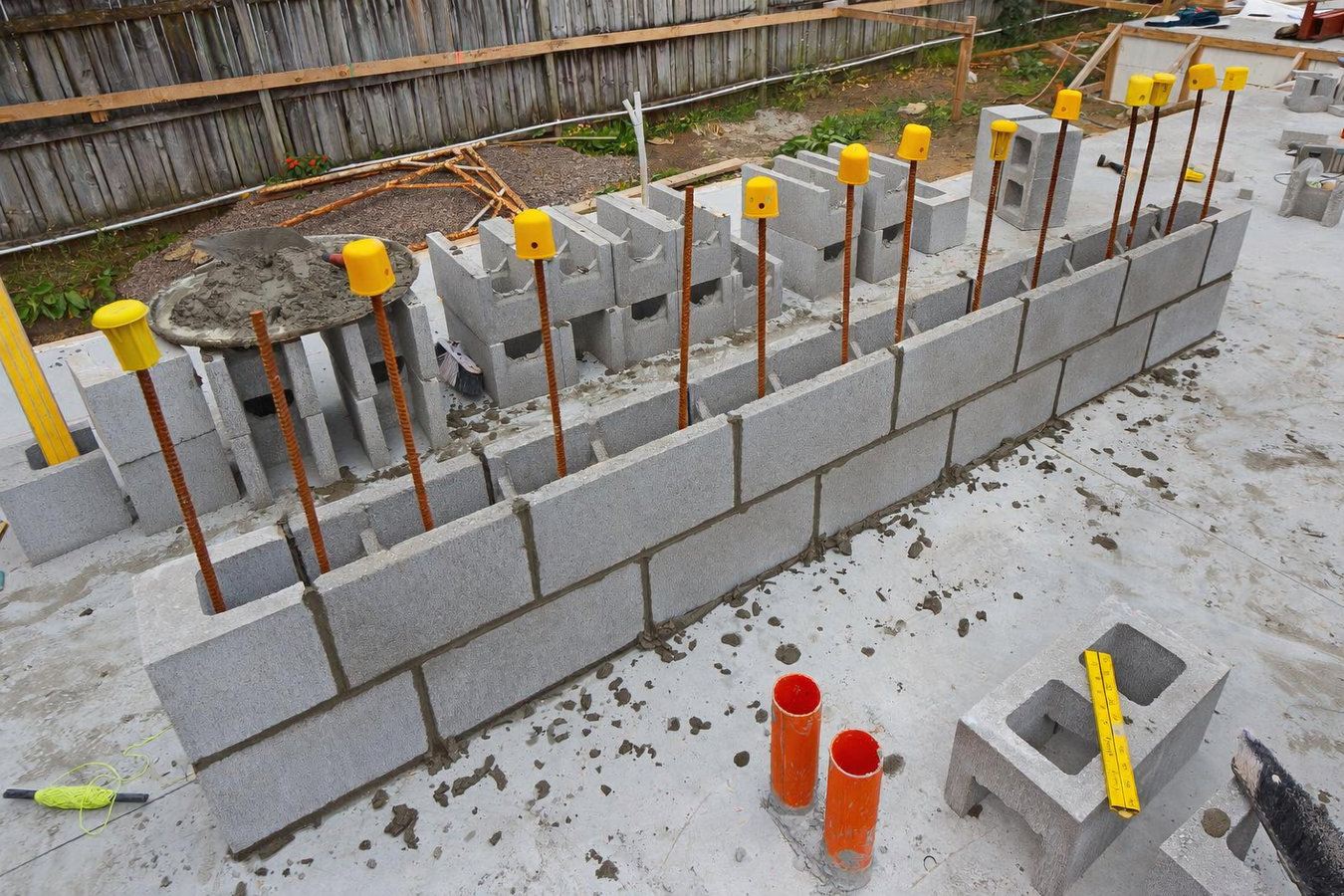
San Bernardino sits in an active seismic zone, which means any new foundation block wall here must include steel reinforcement through the cores and proper footing depth to meet California code - details that matter for both safety and resale value. Many of the city's older homes from the 1940s through 1970s have foundation walls with deteriorated mortar and undersized footings that were never built to today's standards. Our foundation block wall installation meets current San Bernardino County requirements and includes waterproofing on the wall's exterior face before backfill.
Most San Bernardino homes sit on concrete slab foundations poured on expansive soils that swell in wet winters and shrink during the long dry summers. That cycle creates the diagonal cracks at door corners, sticking doors, and uneven interior floors that are common complaints among owners of homes built between the 1950s and 1970s. Addressing foundation cracks early prevents the kind of compounding settlement that turns a manageable repair into a major structural project.
The foothills on San Bernardino's north side produce lot-to-lot grade changes that often require retaining walls rather than standard block fencing. Walls in foothill neighborhoods face significant soil pressure during wet winters, and structures without adequate drainage provisions behind them are a common failure point on properties close to the San Bernardino Mountains.
Block wall fencing is standard on San Bernardino residential properties, and walls installed during the city's postwar construction boom are now 50 to 70 years old. Original footings on these older walls were rarely built deep enough to withstand decades of California seismic activity and the wet-dry soil cycles that cause footing movement in this valley location.
San Bernardino has a significant inventory of pre-1980 brick and block structures near the downtown corridor and in older residential neighborhoods, and many show decades of mortar deterioration, water staining, and spalling brick faces from sustained exposure to triple-digit summer heat. Restoring these surfaces stabilizes the structure and prevents water intrusion that accelerates further breakdown in the dry-wet seasonal climate.
Mortar joints on older brick and block walls in San Bernardino degrade faster than in cooler climates because the extreme summer heat and low humidity pull moisture from fresh mortar and bake existing joints over decades. Tuckpointing - removing the deteriorated outer layer of mortar and packing fresh material into the joint - extends wall life by decades and stops water from getting behind the masonry during winter rains.
San Bernardino is one of the Inland Empire's larger cities, and a lot of its housing stock was built between the 1940s and the early 1980s - the postwar boom that put single-story ranch homes and stucco-clad houses on concrete slab foundations across the valley. Those homes are now 45 to 80 years old. At that age, original masonry features - foundation walls, block fencing, brick detailing around entries and chimneys - are approaching or past the point where mortar deterioration and soil-driven movement require real attention. The soil conditions in San Bernardino's valley location are a primary driver of this maintenance demand. The region sits on soils that expand when wet and contract sharply during the long dry season, and a summer that regularly hits 100 degrees or above pulls moisture out of the ground aggressively. That shrink-swell cycle puts continuous pressure on footings, slabs, and any masonry that is anchored to the ground.
The city's position at the foot of the San Bernardino Mountains adds another variable that flat valley cities don't face. Properties on the north side of the city, closer to the foothills, deal with soil moisture levels that change more dramatically with elevation and slope aspect than properties in the flatter neighborhoods closer to the I-10. Homes near the foothills also sit within range of Santa Ana wind events that can reach 50 to 70 mph, putting surface stress on masonry that is already being worked by seasonal soil movement from below. The San Bernardino County Building and Safety Division enforces seismic reinforcement requirements for structural masonry that apply across the city, which means permitted work here includes inspection steps that protect your investment and document the work for any future property transaction.
Our crew works throughout San Bernardino regularly, and we pull permits through the City of San Bernardino Building and Safety Division for masonry projects that require one. San Bernardino is the county seat of San Bernardino County - the largest county by area in the contiguous United States - and the city covers a wide range of neighborhoods, from older grid streets near the downtown core to foothill neighborhoods north of the 210 freeway closer to California State University, San Bernardino. We regularly work on homes in those northern neighborhoods, which tend to have larger lots, older custom-built construction, and more complex site access than the postwar tracts closer to the valley floor.
The city sits along Historic Route 66, and many of the residential streets near that corridor have homes built in the 1940s and 1950s with original brick features and aging concrete flatwork. These older homes often have non-standard foundation dimensions and original masonry that requires material matching to restore properly. Knowing these neighborhood-level differences helps us give accurate estimates and realistic timelines rather than quoting from a generic price sheet. We also serve homeowners in nearby Redlands to the east and Rialto to the west, so if your job is near the city boundary, getting us out for a look costs you nothing.
Reach us by phone or through the contact form. Every inquiry receives a reply within 1 business day, and we confirm a site visit time that works around your schedule.
A crew member walks the property, evaluates soil and drainage conditions, and measures the scope of work. We provide a written estimate with a line breakdown of materials and labor - no verbal ballpark figures - so you know exactly what the project costs before you agree to anything.
For structural masonry projects, we handle the permit application with the City of San Bernardino so inspection checkpoints are scheduled appropriately. You don't need to be on-site during the work, but we keep you updated on progress and any field conditions that affect the scope.
We walk the completed work with you before we leave. All debris, material bags, and equipment are removed from the property. If any item on the scope needs adjustment, we address it before closing out the job.
We serve homeowners across San Bernardino, CA - from the foothill neighborhoods near CSUSB to the older streets near downtown. Call us or fill out the form and we will get back to you within 1 business day.
(909) 515-5018San Bernardino is one of the Inland Empire's anchor cities, with a population of roughly 222,000 people spread across a wide range of neighborhoods. The city sits at the foot of the San Bernardino Mountains, with elevations ranging from the valley floor near the I-10 freeway to foothill streets that climb toward the national forest. The housing stock reflects the city's long history - older ranch-style homes and bungalows built in the 1940s and 1950s near the downtown core and along the Historic Route 66 corridor share the city with postwar subdivisions from the 1960s and 1970s and more recent construction in the outer neighborhoods. The northern neighborhoods, including areas near Cal State San Bernardino, tend to have larger lots and older custom-built homes that predate the postwar tract era.
As the county seat of San Bernardino County, the city is a regional hub for government, healthcare, and education. It's also a major logistics corridor, with the I-10, I-215, and Route 66 all converging in or near the city. Most residential properties are single-family detached homes on concrete slab foundations, with stucco exteriors and block wall perimeter fencing that is standard across the Inland Empire. Masonry needs here run the full range from foundation block wall work on aging structures to retaining wall construction in the foothill neighborhoods north of the 210 freeway. Homeowners in nearby Redlands and Fontana deal with similar building stock and soil conditions, and we serve all three communities regularly.
Restore structural integrity and stop foundation damage before it spreads.
Learn MoreBuild solid retaining walls that prevent erosion and support landscaping.
Learn MoreCustom masonry fireplaces designed for beauty, safety, and performance.
Learn MoreAdd natural stone veneer accents that elevate any home or structure.
Learn MoreSturdy concrete block walls for privacy, security, and property value.
Learn MoreSolid block wall foundations engineered to support lasting structures.
Learn MoreCustom outdoor kitchen masonry built for cooking, entertaining, and durability.
Learn MoreBeautiful walkways in brick, stone, or pavers that complement your property.
Learn MoreProfessionally installed brick walls for curb appeal and lasting durability.
Learn MoreFrom foundation block walls on older postwar homes to retaining walls in the foothills, our crew handles masonry projects across San Bernardino. Call today or submit the form and we will follow up within 1 business day.